

























AutoGPT, AgentOps & Beyond: The 2025 Tech Stack for AI Agent Development
Discover the 2025 tech stack for AI agent development, featuring tools like AutoGPT, AgentOps, LangChain, and CrewAI. Explore frameworks, orchestration platforms, and trends shaping intelligent software solutions.

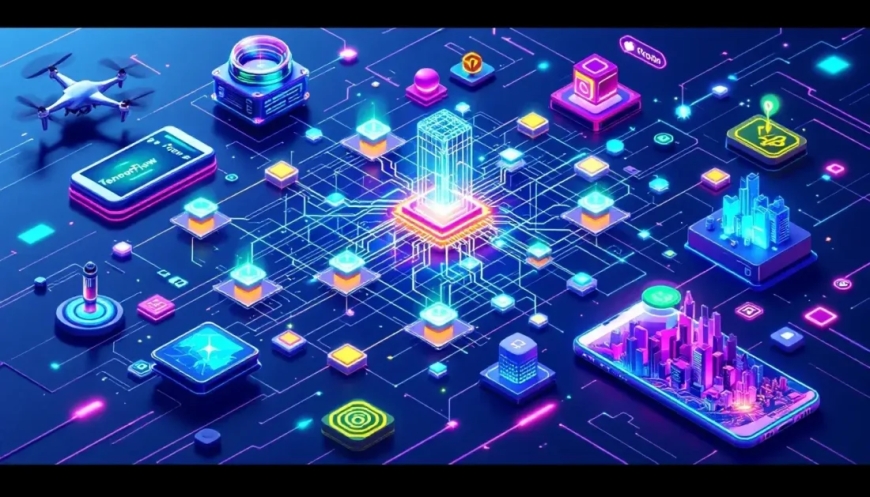
By 2025, the environment for building AI agents will be a vibrant ecosystem of tools, frameworks, and orchestration tools, allowing developers to create intelligent autonomous agent systems. From goal-driven automation in AutoGPT to observability through AgentOps and modular orchestration via LangChain, the tech stack of AI agent has matured to provide scalable, production-ready solutions. This article will describe the major components of the 2025 tech stack and outline frameworks, tools, and services from which to build next generation AI agents.
The Evolution of AI Agent Development
AI agents are no longer mere chatbots; they are now autonomous agents capable of reasoning, planning, and executing work processes. In contrast to large language models (LLMs) that focus on text generation, agents are able to incorporate both memory and tools, as well as decision-making logic to operate in an independent, autonomous fashion. The tech stack of 2025 represents this evolution of AI agents with a renewed emphasis on frameworks that enable workflows, collaboration, and reliability, features critical to artificial intelligence agent development. Developers can now use specialized tools to support challenging areas like state management, orchestrating tasks, and real-time insight and observability.
Core Components of the AI Agent Tech Stack
A comprehensive tech stack for the AI agent context normally is built in four layers: model layer, agent framework layer, orchestration layer, and observability tools. Each layer directly contributes to building agents capable of completing multiple work processes in heterogeneous use cases; whether that is automating customer support, or defining software development pipelines.
Model Layer: Foundation of Intelligence
The model layer is the brain of an AI agent, which is powered by generative language model architectures (LLMs), such as GPT-4, Claude, or open source alternatives like Llama. The models or LLMs serve a critical component by providing natural language models to support natural language understanding, reasoning, and generation. The big development priorities for developers in 2025 will be the mainstream use of model-agnostic frameworks and tools that support providers of LLMs so that developers can utilize many models in their own AI agent development. For instance, LiteLLM is a tool that allows one-click swapping of an LLM using a single API to reduce dependency on LLM vendors and allow for better scaling.
Agent Framework Layer: Building Blocks for Autonomy
Agent frameworks abstract the complexity of integrating LLMs with tools, memory, and workflows. Here are the standout frameworks shaping in 2025:
-
AutoGPT: There are many potentially useful applications that may eventually build services around autonomous agents, such as AutoGPT, which is a leading autonomous agent specializing in goal-oriented tasks. AutoGPT, similar to other autonomous agents, will break down goals into subtasks or tasks relying on LLMs to plan, find data, fetch it and perform actions with little human action.
Conversely, AutoGPT is best suited for batch processes like market analysis or similar types of work assignments. Due to a recursive execution of tasks and its saliency of plugins built for it, AutoGPT has become a standard for developers and business people who appreciate a hands-free solution for fully automating an agent -with caveats to employ AutoGPT appropriate based on its token context and suggesting a method of monitoring the entire tasks could maximize inefficiencies.
-
LangChain: LangChain is the centerpiece of any tech stack by 2025 it has a significant number of modular tools for prompt chaining, memory building, and API integration. LangChain's flexibility allows for very divergent applications, from conversational agents to sport and academic study of document analysis. The focus on developer or enterprise-grade was also evident when, for instance, LangChain developed LangSmith to help programmers build, debug and centre some metrics around performance, making it an indispensable tech stack for enterprise-grade AI agent development.
-
LangGraph: LangGraph builds off of LangChain, providing graph-based workflows for stateful, multi-agent systems. Actions taken by an agent are treated as nodes and transitions made between actions as edges. This is relevant for modeling scenarios where the goal is to determine the best action to take since cycles can be accommodated; this is useful when modeling tasks requiring reflection and iterative decision-making (like a strategic planning system).
-
CrewAI: CrewAI organizes agents into "crews," where participants fill designated roles (e.g. Planner, Researcher, Executor) and the focus is on collaboration by role. Powerful in the sense that it is designed in a "Pythonic" way and with relatively low friction, it is particularly relevant for rapid prototyping of collaborative workflows (e.g. content pipelines; automating customer service interactions), even if collaborative multi-agents systems are limited to sequential orchestration. The perceived simplicity of CrewAI may appeal to developers who are novice to multi-agent systems.
-
AutoGen: Microsoft's AutoGen develops workflows to manage the coordination of multi-agents using conversations, in an asynchronous manner. Agents communicate with each other using natural language and framing the activities are tasks delegated by one agent to another.
This is useful for dynamic environments such as managing a code review process or automating research; specifically notable is that AutoGen is built using Microsofts ubique ecosystem, which enhances Enterprise uptake.
Orchestration Layer: Coordinating Complex Workflows
Orchestration platforms ensure agents work cohesively, managing task delegation, state persistence, and inter-agent communication. In 2025, orchestration is critical for scaling AI agents to handle enterprise-grade use cases.
-
AgentOps: AgentOps has observability baked in, such as debuggers, auditors, and monitoring tools for AI agents and workflows. The "time-travel" debugging and cost tracking features should be integrated with platforms such as LangChain and CrewAI to support operational reliability and resiliency in production environments. For developers looking to get visibility into agent behavior and performance, AgentOps will be relevant and prove valuable.
-
Other Platforms: Tools such as Inngest and Temporal provide persistence methods for long-running workflows that maintain consistent states across distributed agent ecosystems. These tools are indispensable for applications which require fault tolerance and high availability, such as revenue operations or compliance review systems.
Observability and Monitoring: Ensuring Reliability
As AI Agents will eventually serve as autonomous decision making agents, observability and management tools are essential. Tools such as LangSmith and AgentOps offer tracking and issue reporting capabilities, while they display real-time performance monitoring of Agent activities, prompt auditing, and error capturing. These tools allow software developers to identify occurrences of bottlenecks in their workflows, iterate improvements, improve audit compliance against security and safety practices. For example, LangSmith provides a detailed visualization of decision flows as Agents communicate with Agent input, and will allow the software developer an additional level of explainability in complex systems.
Emerging Trends in AI Agent Development
The 2025 tech stack is shaped by trends that prioritize scalability, collaboration, and accessibility:
-
Multi-Agent Collaboration: Frameworks like CrewAI and AutoGen emphasize teamwork, enabling agents to specialize and coordinate on shared goals. This mirrors human organizational structures, making agents more effective for tasks like logistics or content creation.
-
No-Code and Low-Code Solutions: Platforms like Flowise and AgentGPT lower the barrier to entry, allowing non-technical users to build agents using drag-and-drop interfaces. This democratizes the AI agent development services companies by enabling rapid prototyping for startups and small teams.
-
Graph-Based Architectures: LangGraphs rise highlights the importance of stateful workflows. By modeling tasks as graphs, developers can visualize and debug complex agent interactions, improving reliability in production.
-
Enterprise Integration: Frameworks like Semantic Kernel and AgentFlow focus on embedding AI into existing business systems, offering connectors for CRMs, databases, and APIs. This ensures agents align with organizational needs, from customer support to internal automation.
Choosing the Right Tech Stack
Selection of tools is contingent upon your project's preferences. For short form prototypes, we suggest CrewAI and its simplicity and no code options. For complex, stateful workflows, you'll find unmatched flexibility with LangGraph. AutoGPT is for autonomous goal based objectives; AgentOps was built for autonomous decision making in a production grade environment. Keep in mind your team's experience and familiarity with technology, existing tech stack, and on premise versus cloud deployment strategies.
Conclusion
The saying is true, "we can be smarter together." The dev tech stack for AI agent development available in 2025 is an amazing collection of state-of-the-art tools, frameworks, and orchestration platforms. AutoGPT serves the function of driving independence and autonomy. At the same time LangChain and LangGraph provide the framework within which modular workflows can be built in combination with CrewAI which enables a collaboration that extends beyond just it. I do hope agent development and AI agents in general are advanced factors in your development pipeline, regardless of whether you're experimenting with automation as an early stage start-up or deploying complex workflows into a large enterprise. An exciting tech stack will allow you to overcome obstacles and challenges in each phase to optimise what AI agents can offer you in 2025.