



















How Early Education Shapes Lifelong Success


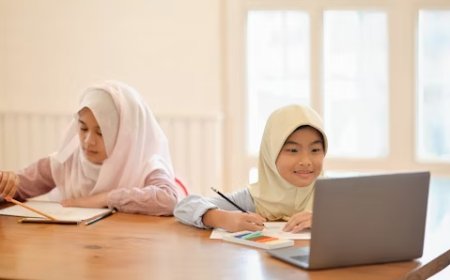
The foundation of any successful society lies in its ability to educate its youth. The earlier this process begins, the stronger the future becomes. Early educationcomprising pre-primary and primary schoolingplays a pivotal role in shaping not only academic success but also emotional intelligence, problem-solving abilities, and social behavior.
Across India, efforts are being made to ensure that children from every backgroundespecially underserved communitiesgain access to early and quality education. But the journey isnt easy. It requires collective action from the government, civil society, and local communities.
Why Early Education Matters More Than You Think
Early childhood is the most crucial phase in a human's development. Between the ages of 3 and 8, a childs brain develops rapidly, absorbing knowledge, behavior, and social patterns that last a lifetime.
Key Benefits of Strong Early Education:
-
Cognitive Development: Enhances memory, language, and analytical skills
-
Emotional Intelligence: Teaches self-control, empathy, and cooperation
-
Social Confidence: Builds communication and collaboration skills
-
Health Awareness: Introduces hygiene, nutrition, and safety
When children receive the right support at this stage, they are more likely to succeed later in academics and life.
To bridge the accessibility gap, various grassroots initiatives are actively working on the ground. For instance, a free education NGO in Delhi NCR has established learning centers in urban slums where children receive foundational learning in math, reading, and moral values. These efforts are vital in cities where thousands of kids grow up in environments that lack educational stimulation.
Girls at the Core: Ensuring Equal Access for All
The challenge of early education becomes even more complex when gender inequality enters the picture. In many Indian households, boys are often prioritized over girls when it comes to schooling. This gap begins early and can extend into adulthood if not corrected.
To address this, several government schemes for girl's education in India have been designed to offer financial incentives, scholarships, and infrastructure upgrades to improve girls participation in education from the foundational level.
Programs like Beti Bachao Beti Padhao, Kasturba Gandhi Balika Vidyalayas, and Sukanya Samriddhi Yojana dont just provide financial reliefthey send a strong message to families: your daughters education matters.
Common Barriers to Early Learning in India
Even with support systems in place, early education in low-income communities still faces several challenges. These must be addressed to ensure children start strong.
H3: Household & Cultural Challenges
-
Lack of awareness about the importance of preschool
-
Belief that girls dont need formal education
-
Older siblings caring for younger ones instead of attending school
H3: Infrastructure Deficits
-
No pre-primary facilities in government schools
-
Shortage of trained Early Childhood Care and Education (ECCE) teachers
-
Poor learning materials and toys
H3: Economic Constraints
-
Preference for sending children to work or street vending
-
Inability to afford books, uniforms, or transportation
-
No financial incentives for early-stage enrollment
What an Ideal Early Education Environment Looks Like
Creating meaningful early education experiences isnt only about having a classroom. Its about what happens inside those four walls.
Key Components of Quality ECCE:
| Component | Description |
|---|---|
| Safe and Stimulating Space | Colorful, hygienic, well-lit, and safe learning areas |
| Trained Facilitators | Teachers skilled in child psychology and early pedagogy |
| Play-Based Curriculum | Learning through music, stories, puzzles, and roleplay |
| Parent Engagement | Regular workshops and home activities for continuity |
| Nutritious Mid-Day Meals | Support growth and improve concentration |
These features are critical for helping children transition smoothly into primary school and beyond.
Role of NGOs in Bridging the Learning Gap
Government systems often fall short in reaching every household. Thats where NGOs step in, customizing education delivery to local needs.
H4: How NGOs Make Early Education Accessible:
-
Community Centers in slum areas for children aged 36
-
Mother-Child Programs to prepare children even before school age
-
Anganwadi Partnerships to provide nutritional and educational support
-
Toy Libraries & Learning Kits to promote learning at home
These grassroots solutions adapt to real-world challenges, providing an educational lifeline where none exists.
Integrating Health and Nutrition into Early Learning
Learning is not just cognitiveits physical too. A malnourished or unwell child cannot focus, explore, or express.
H3: How Health Impacts Learning:
-
Poor eyesight or hearing affects classroom comprehension
-
Nutritional deficiencies can delay brain development
-
Infectious diseases cause frequent absenteeism
Early education programs must integrate:
-
Regular health checkups
-
Growth monitoring
-
Iron and folic acid supplementation
-
Awareness campaigns on sanitation
This holistic model ensures not just better learners, but healthier children.
Parents: The First Teachers
Educating children begins at home. When parents understand their role in early learning, school becomes a continuationnot a startof education.
How to Empower Parents:
-
Host orientation sessions at local centers
-
Share simple learning activities for home
-
Distribute picture books and audio stories
-
Reward family participation in school programs
When parents are included, dropout rates decline, and performance improves.
Indias Vision for Universal Early Education
The New Education Policy (NEP) 2020 marks a shift in Indias approach to early education. It recognizes ages 38 as a foundational stage and recommends:
-
Inclusion of preschool in formal education
-
ECCE curriculum aligned with national standards
-
Anganwadi worker training upgrades
-
Multi-level play-based syllabus development
This policy lays the groundwork for a uniform, equitable early learning experience across rural and urban India.
Conclusion
Early education is not a luxuryits a necessity. It determines how a child will perform not just academically but socially, emotionally, and economically for years to come.
Organizations like a free education NGO in Delhi NCR are ensuring that every child, regardless of where theyre born, gets a fair shot at learning. Alongside, the government schemes for girl's education in India are ensuring girls are no longer left behind at the very first step.
If India is to truly unlock its demographic dividend, the investment must start early. With stronger policies, community support, and parent engagement, we can ensure every child gets the foundation they deserveright from day one.
-1744728435835.webp)